
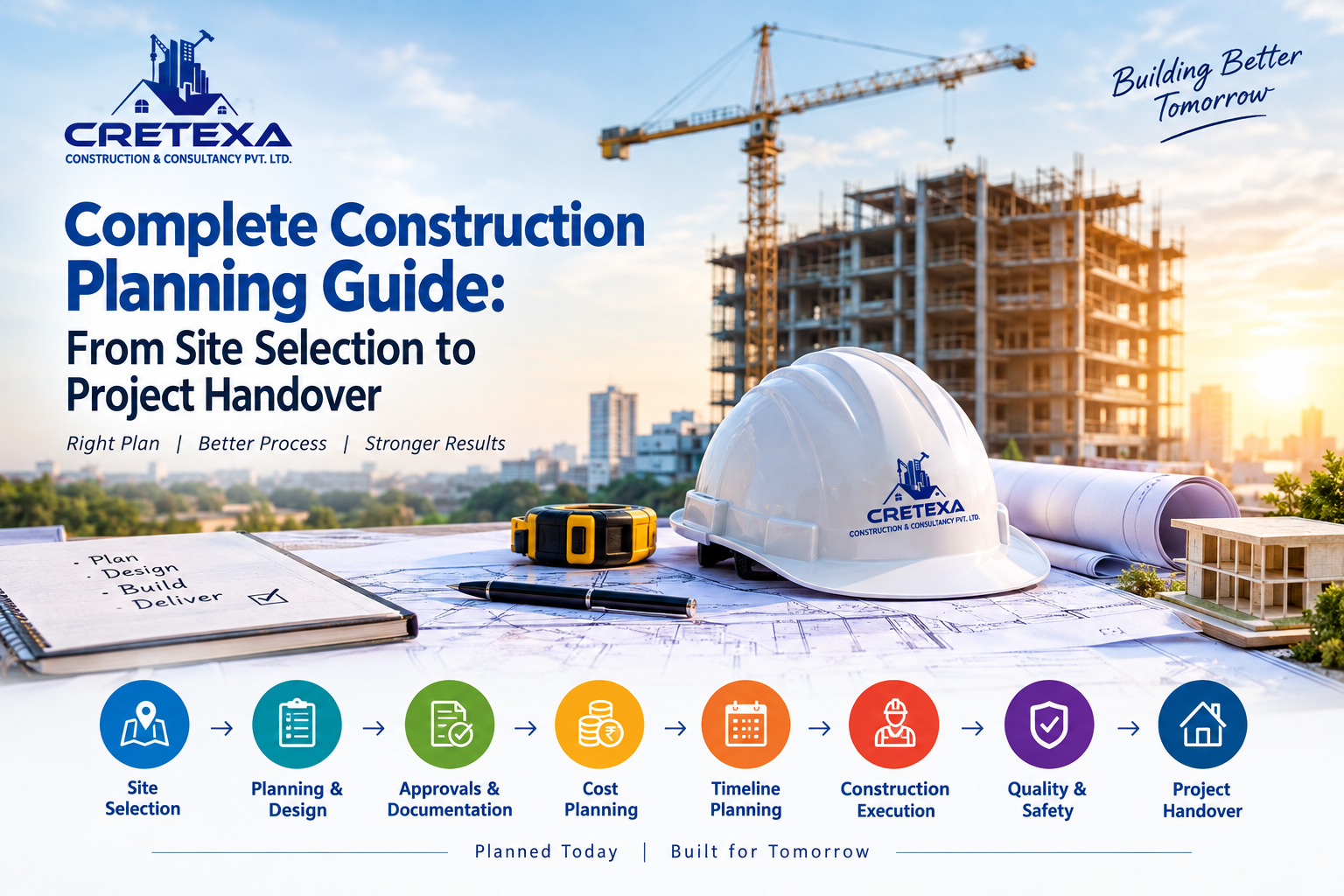
Complete Construction Planning Guide: From Site Selection to Project Handover
Building a house, office, commercial property, or any other structure is a major project. Good construction does not start with bricks, cement, or labour. It starts with proper planning.
A clear construction planning process helps you understand the site, project requirements, design, budget, materials, timeline and execution before work begins. It also helps reduce avoidable delays, unexpected costs and changes during construction.
For a construction project in Patna, proper planning becomes even more important because every site has different conditions, access requirements, soil conditions, development rules and project needs.
Whether you are planning a residential building, office, commercial property or another type of structure, this guide explains the complete process from site selection to final project handover.
What Is Construction Planning?
Construction planning is the process of deciding how a building project will be designed, budgeted, scheduled and executed before and during construction.
It connects different parts of a project, including site assessment, architectural planning, structural design, cost estimation, material procurement, labour management, quality control and project completion.
A good plan gives everyone involved a clear understanding of what needs to be done, when it needs to be done and what resources are required.
The National Building Code of India 2016 also covers construction management, construction planning, site management, construction practices and safety.
Why Is Construction Planning Important?
A construction project involves many activities that need to work together. If one important activity is missed, it can affect the next stage.
Proper planning can help with:
- Better control over the project budget
- Clear project requirements
- Proper use of materials and labour
- Better construction timeline planning
- Improved coordination between professionals
- Easier progress monitoring
- Better quality control
- Improved site safety
- Fewer avoidable changes and delays
The goal is not simply to finish construction. The goal is to complete the project according to the agreed requirements, quality expectations, budget and schedule.
What Should You Check Before Starting a Construction Project?
Before starting physical construction, you should understand the site and define the project properly.
1. Select the Right Construction Site
Site selection is one of the first decisions in a building project.
Check important factors such as:
- Location and surrounding development
- Road access
- Plot dimensions
- Site level
- Drainage conditions
- Water availability
- Electricity access
- Soil condition
- Accessibility for construction vehicles
- Space for storing construction materials
A site may look suitable at first, but a proper assessment can reveal issues that may affect design, cost or construction.
For a project in Patna, it is useful to consider the local site conditions and access requirements before finalising the construction plan.
2. Check Land and Project Documents
The project should move forward only after the required land and project documents have been reviewed.
Depending on the project, this may include ownership documents, site measurements, applicable approvals, building plan requirements and other relevant documentation.
The exact requirements can vary according to the property, project type and applicable local rules. Professional advice should be taken where required.
3. Conduct a Site Assessment
A proper site assessment can help identify issues before construction begins.
The assessment may include:
- Site survey
- Soil investigation
- Ground level assessment
- Existing structures
- Drainage
- Utility connections
- Site access
- Nearby structures
This information helps the design and construction team prepare a more practical building project plan.
What Is Pre-Construction Planning?
Pre-construction planning is the stage where the project scope, design, budget, resources, approvals, materials, and execution strategy are prepared before physical construction begins.
This stage creates a foundation for the rest of the project.
Define the Project Scope
First, decide what you want to build.
For example:
- Residential house
- Apartment building
- Office building
- Commercial property
- Institutional building
- Industrial structure
You should also define the expected built-up area, number of floors, facilities, room requirements, finishing expectations and other important requirements.
A clear scope helps prevent confusion later.
Prepare Architectural and Structural Plans
The design stage converts the project requirements into practical drawings and plans.
Depending on the project, professionals may be involved in:
- Architectural planning
- Structural engineering
- Electrical planning
- Plumbing planning
- Fire and safety planning
- Interior requirements
- External development
The different plans should be properly coordinated before execution begins.
Create a Building Project Checklist
A simple checklist can keep the planning process organised:
- Site selected
- Site survey completed
- Soil assessment completed
- Project requirements finalised
- Architectural plan prepared
- Structural plan prepared
- Cost estimate prepared
- Approval requirements checked
- Construction team finalised
- Materials planned
- Construction schedule prepared
- Quality plan prepared
- Safety requirements considered
- Handover checklist prepared
How Does Construction Cost Planning Work?
Budget planning is one of the most important parts of construction project planning.
A project should have a realistic cost estimate before major work begins. The budget should consider the full scope of work rather than only the cost of basic construction materials.
A construction budget may include:
- Architectural and consultancy services
- Civil construction
- Structural work
- Cement, steel and other materials
- Labor
- Electrical work
- Plumbing
- Flooring
- Doors and windows
- Painting
- Waterproofing
- External development
- Applicable approval-related expenses
- Contingency for unexpected requirements
The actual cost depends on the project size, design, specifications, materials, site conditions, labor, and market conditions.
CPWD’s Works Manual describes different types of estimates used in construction work, including preliminary and rough cost estimates, and follows the sequence from pre-construction activities through execution and completion.
Why Should You Keep a Construction Contingency?
Construction projects can face unexpected requirements.
For example, site conditions may differ from initial expectations, design changes may be required or additional work may become necessary.
A contingency allowance gives the project some financial flexibility. The suitable amount depends on the individual project and should be decided as part of professional cost planning.
How Do You Create a Construction Timeline?
A construction timeline shows the expected sequence of project activities.
A typical building project may follow this broad sequence:
Planning → Design → Approvals → Site Preparation → Foundation → Structure → Walls → Roofing → Electrical & Plumbing → Finishing → Inspection → Handover
The actual timeline can vary depending on the size and type of project.
What Can Cause Construction Delays?
Common causes include:
- Design changes
- Delayed approvals
- Material availability
- Labour availability
- Poor coordination
- Weather conditions
- Unexpected site conditions
- Budget interruptions
- Rework
- Poor procurement planning
Good construction timeline planning identifies important activities before they become urgent problems.
How Can Construction Delays Be Reduced?
A project can be better organised through:
- Clear drawings
- Advance material planning
- Defined responsibilities
- Regular site monitoring
- Progress tracking
- Proper procurement scheduling
- Early identification of project issues
The earlier a problem is identified, the easier it can usually be addressed.
What Is a Construction Execution Plan?
A construction execution plan explains how the planned project will be converted into actual construction work.
It connects the project schedule with people, materials, equipment and site activities.
A construction execution plan can include:
- Work sequence
- Labour requirements
- Material procurement
- Equipment requirements
- Site logistics
- Responsibilities
- Quality checks
- Safety procedures
- Project schedule
- Progress reporting
- Risk management
A clear execution plan helps the construction team understand what should happen at each stage.
How Is Construction Project Management Done?
Construction project management brings different activities together and keeps the project moving according to the plan.
Manage Construction Materials
Materials should be selected according to project specifications and purchased according to the construction schedule.
Good material management includes:
- Defining material specifications
- Planning procurement
- Checking quality
- Proper storage
- Monitoring usage
- Reducing unnecessary wastage
Buying materials too early can create storage problems, while buying them too late can affect the work schedule.
Manage Labour and Resources
Different stages of construction require different skills.
Depending on the project, the team may include:
- Engineers
- Supervisors
- Skilled workers
- Contractors
- Technicians
- Equipment operators
Proper resource planning helps ensure that the required people and equipment are available when needed.
Monitor Construction Progress
Regular monitoring helps compare planned work with actual progress.
Important areas to monitor include:
- Work completed
- Material availability
- Labour availability
- Quality
- Safety
- Project schedule
- Pending activities
- Changes or issues
This creates a clear picture of the project’s current status.
How Do Quality and Safety Fit Into Construction Planning?
Quality and safety should be considered from the planning stage itself.
BIS explains that NBC 2016 Part 7 covers construction management, time, cost, quality, health and safety, construction planning, site management and construction practices.
Construction Quality Checklist
Depending on the project, quality checks may cover:
- Foundation work
- Reinforcement
- Concrete
- Masonry
- Waterproofing
- Plumbing
- Electrical work
- Flooring
- Doors and windows
- Painting
- Finishing work
Quality should be checked during construction instead of waiting until the project is almost finished.
Basic Construction Site Safety Planning
Safety planning may include:
- Appropriate personal protective equipment
- Safe material storage
- Proper site housekeeping
- Safe electrical practices
- Equipment safety
- Controlled site movement
- Worker awareness
- Appropriate site protection measures
A well-managed site protects workers and helps maintain a more organised construction environment.
What Happens During Final Inspection and Project Handover?
The project is not complete simply because the main construction work has finished.
A final inspection should identify incomplete or defective work before handover.
Complete the Final Inspection
The inspection can cover:
- Civil work
- Electrical systems
- Plumbing
- Doors and windows
- Flooring
- Painting
- Fixtures
- Waterproofing
- External development
- Other agreed project requirements
Any pending or corrective work should be identified and completed.
Prepare the Handover Checklist
The final handover may include:
- Final inspection
- Pending-work review
- Rectification of identified issues
- Final cleaning
- Relevant project documents
- Warranty information where applicable
- Keys and access
- Final client approval
Proper handover gives the client a clear understanding of the completed project and relevant documentation.
Construction Planning Checklist for Your Next Building Project
Before construction starts, review these points:
☐ Site selected
☐ Site survey completed
☐ Soil assessment completed
☐ Project scope finalised
☐ Architectural design prepared
☐ Structural design prepared
☐ Cost estimate prepared
☐ Approval requirements checked
☐ Construction team selected
☐ Materials planned
☐ Construction timeline prepared
☐ Execution plan prepared
☐ Quality checks planned
☐ Safety requirements considered
☐ Final inspection planned
☐ Handover checklist prepared
This simple checklist can help property owners identify important planning activities before work begins.
Why Work With a Construction Consultancy for Your Project?
A construction project involves many decisions, from site assessment and design coordination to cost planning, execution and quality monitoring.
Working with an experienced construction and consultancy company can help bring these activities together under a structured process.
Cretexa Construction And Consultancy Private Limited provides construction and consultancy services with a focus on planned project execution. For property owners in Patna, discussing project requirements at an early stage can help create a clearer approach to construction planning.
The right approach depends on the project type, site, budget, design and construction requirements. A professional discussion before starting work can help identify the key stages that need attention.
Frequently Asked Questions About Construction Planning
What is construction planning?
Construction planning is the process of preparing the project scope, site requirements, design, budget, resources, timeline and execution strategy before and during construction.
Why is construction planning important?
Construction planning helps organise the project before physical work begins. It can improve budget control, resource management, scheduling, quality monitoring and coordination between different teams.
What are the main stages of construction planning?
The main stages include site selection, site assessment, project scope definition, design, cost planning, approvals, resource planning, scheduling, construction execution, quality control, final inspection and project handover.
What is pre-construction planning?
Pre-construction planning is the preparation stage before physical construction. It covers project requirements, site assessment, design, estimates, approvals, resources, procurement and construction scheduling.
How do you prepare a construction budget?
Start by defining the project scope and then estimate the costs of design, civil work, structural work, materials, labour, electrical and plumbing work, finishing and other project requirements. A suitable contingency should also be considered.
How can construction delays be reduced?
Clear drawings, realistic scheduling, advance procurement, regular site monitoring, defined responsibilities and early problem identification can help reduce avoidable construction delays.
What is a construction execution plan?
A construction execution plan explains how the project will be carried out. It normally covers work sequence, resources, materials, labour, equipment, site logistics, quality, safety, responsibilities and project scheduling.
Why is site selection important?
The construction site affects design, foundation requirements, access, drainage, utilities, logistics and overall project cost. A proper site assessment should be completed before final planning.
Key Takeaways
Good construction starts with good planning.
A successful construction planning process should cover the project from the first site assessment to final handover. Start with the site and project requirements. Prepare proper designs and a realistic budget. Plan materials, labour and timelines before execution. Monitor quality and safety throughout construction.
For a building project in Patna, early planning can make the construction process more organised and easier to manage.
If you are planning a residential, commercial or office project, Cretexa Construction And Consultancy Private Limited can be considered for construction and consultancy requirements in Patna.