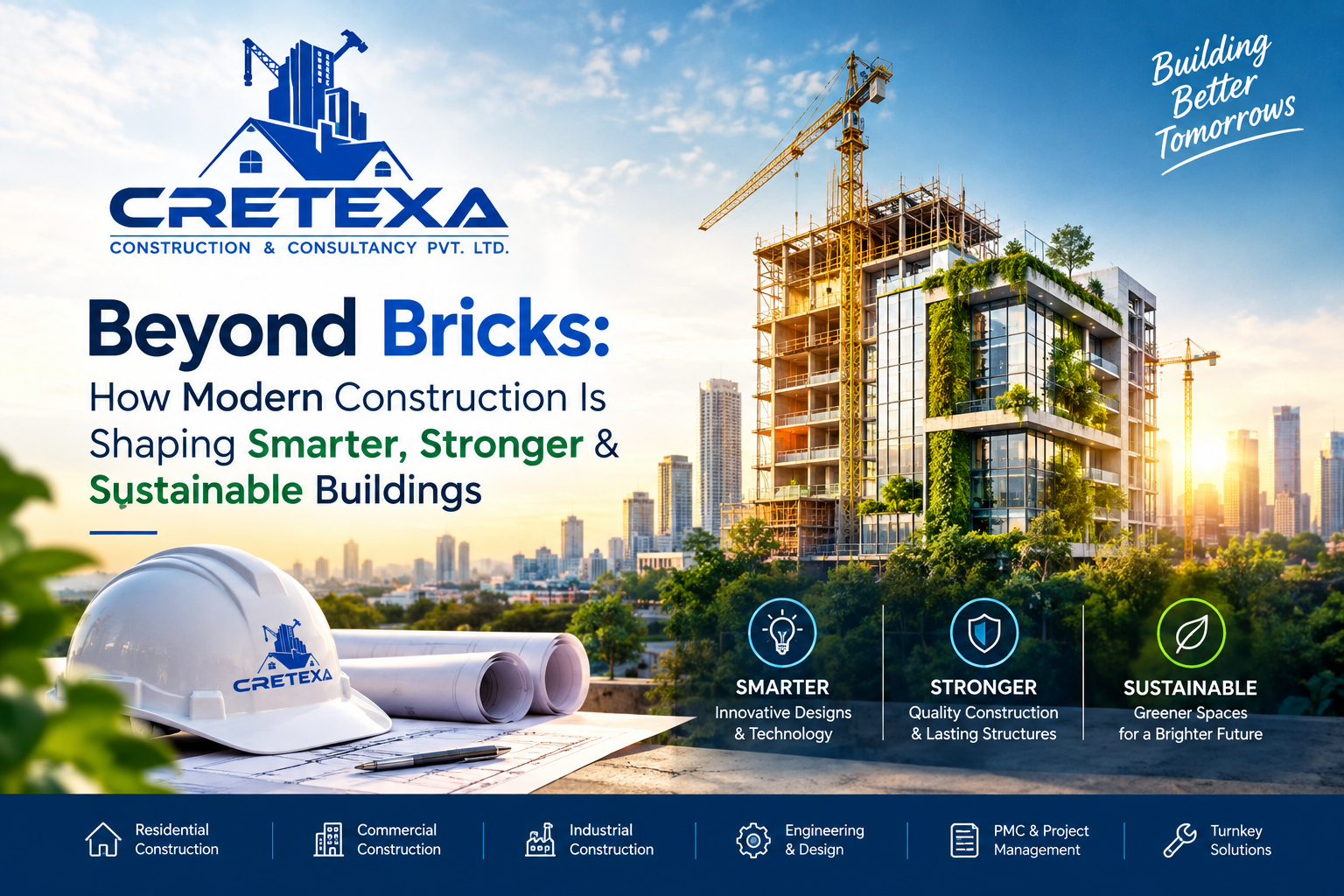
Beyond Bricks: How Modern Construction Is Shaping Smarter, Stronger & Sustainable Buildings
Think about the last building that actually impressed you. Chances are, it wasn’t just tall or expensive-looking. It felt different. Maybe it stayed cool without the AC running all day. Maybe it just felt solid, the kind of place that would still be standing strong in thirty years.
That’s the shift happening in construction right now, across India and right here in Patna too. Buildings aren’t just walls and a roof anymore. They’re planned, engineered, and built with a completely different mindset. Bricks and cement are still part of the story, but they’re no longer the whole story.
At Cretexa Construction And Consultancy Private Limited, we see this shift every single day, on every site we work on. This blog is about what “modern construction” really means, why it matters for anyone planning to build, and how to make sure your next project gets it right from day one. Beyond Bricks.
What Does “Modern Construction” Really Mean?
In simple words, modern construction means building smarter, not just building bigger. It’s the combination of better materials, better technology, and better planning, all working together so the final structure performs well for decades, not just years.
Moving Past Traditional Brick-and-Mortar Thinking
For a long time, construction in India followed a fairly fixed pattern. Lay the foundation, build the walls, plaster them, and paint them done. It worked, but it left a lot on the table. Buildings built this way often struggled with heat, cracks, water seepage, and rising maintenance costs within just a few years.
Modern construction asks a different question at every step: not just “will this work,” but “will this work well, for a long time, without constant repairs.” That one shift in thinking changes almost everything about how a building gets designed and built.
The Three Pillars Smart, Strong, Sustainable
If you strip modern construction down to its core, it really comes down to three things:
- Smart: using technology and better planning to avoid errors and delays
- Strong: using materials and engineering that actually last
- Sustainable: building in a way that’s kinder to the environment and cheaper to run over time
Everything else in this blog is really just an expansion of these three ideas Beyond Bricks.
Why Construction in India Is Changing So Fast
Urban Growth and the Demand for Better Buildings
Cities are growing fast, and so are people’s expectations. A house today isn’t just meant to shelter a family. People want it to be efficient, low-maintenance, and comfortable through Bihar’s hot summers and humid monsoons. Businesses want commercial spaces that reflect professionalism and actually function well for staff and customers.
Rising Expectations from Homeowners and Businesses
Clients today are more informed than they used to be. They’ve seen what good construction looks like, whether through social media, travel, or simply comparing notes with friends who built recently. That awareness is pushing construction companies, including us, to raise the bar constantly.
The Role of Regulation and RERA Compliance
There’s also a structural reason for this shift. Regulations like RERA have made transparency and accountability a bigger part of the construction process. Builders now need to plan properly, document clearly, and deliver what they promise. That’s pushed the whole industry toward more professional, modern practices.
Smarter Construction: Technology That’s Changing the Game
Building Information Modeling (BIM) Explained Simply
BIM sounds technical, but the idea behind it is simple. Instead of relying on flat 2D drawings, BIM creates a detailed digital model of the entire building before construction even begins. Every wall, pipe, and beam is mapped out in advance. This means fewer surprises on site, fewer clashes between different systems, and far fewer costly changes mid-construction.
Smart Home and Smart Building Integration
Modern buildings are increasingly designed with technology built in from the start, not added later as an afterthought. Things like automated lighting, energy monitoring, and smart security aren’t reserved for luxury projects anymore. They’re becoming a standard consideration, even in mid-range residential and commercial builds beyond Bricks.
How Technology Reduces Delays and Errors
A lot of construction delays come from something surprisingly simple: miscommunication. A drawing that wasn’t updated, a measurement that got missed, a material order that came in wrong. Modern planning tools catch these issues early, on screen, instead of on site where they cost real time and money to fix.
Quick Snapshot: Traditional vs. Smart Construction Planning
| Aspect | Traditional Approach | Smart Construction Approach |
| Planning | 2D drawings, manual coordination | Digital 3D modeling (BIM) |
| Error detection | Found during construction | Found before construction begins |
| Communication | Fragmented across teams | Centralized and documented |
| Technology use | Minimal | Integrated from design stage |
Stronger Construction: Materials and Techniques That Last
Modern Materials Replacing Conventional Ones
The materials going into buildings today are simply better than what was commonly used a decade ago. Higher-grade concrete mixes, corrosion-resistant reinforcement, and advanced waterproofing solutions all mean buildings that hold up better against weather, time, and daily wear.
Structural Engineering Advances for Durability
Good structural engineering isn’t just about meeting minimum safety codes. It’s about designing a building that can comfortably handle real-world stress, whether that’s heavy monsoon rain, temperature swings, or just decades of regular use. This is where experienced engineers make a genuine difference to how long a building actually lasts.
Quality Control Practices That Actually Matter
Strong buildings aren’t an accident. They come from consistent quality checks at every stage, from the concrete mix ratio to curing time to how reinforcement is placed. Skipping these steps might save a few days now, but it almost always costs more in repairs later Beyond Bricks.
Sustainable Construction: Building for the Future
Energy-Efficient Design Principles
Sustainable construction starts with design, not just materials. Things like proper orientation, natural ventilation, and thoughtful window placement can dramatically cut down how much a building needs to rely on air conditioning and artificial lighting.
Eco-Friendly Materials Gaining Popularity in India
Materials like fly ash bricks, recycled aggregates, and low-VOC paints are becoming easier to source and more commonly used across Indian construction projects. They reduce environmental impact without compromising on strength or finish Beyond Bricks.
Green Certifications Worth Knowing About (IGBC, GRIHA)
If you’re serious about sustainability, it’s worth knowing about certifications like IGBC (Indian Green Building Council) and GRIHA. These frameworks assess a building’s environmental performance and can add real long-term value, especially for commercial properties.
Turnkey Construction Solutions: Why They Make Sense
What “Turnkey” Actually Means for You
Turnkey construction simply means one team handles everything, from design and approvals to material procurement, actual construction, and final handover. You’re not juggling five different contractors and hoping they coordinate with each other. One point of contact, one team accountable for the outcome.
Residential vs Commercial Turnkey Projects
For residential projects, turnkey construction usually means less stress for the homeowner, who often has a full-time job and limited time to supervise daily site work. For commercial projects, it usually means faster timelines, since a single coordinated team can move through design, approvals, and construction without the delays that come from managing multiple vendors separately Beyond Bricks.
How It Saves Time, Cost, and Stress
When one team owns the entire process, there’s far less room for the finger-pointing and delays that happen when responsibility is split across contractors. That usually translates into faster completion, fewer cost overruns, and a much smoother experience overall.
How to Choose the Right Construction Company
Questions to Ask Before You Sign a Contract
Before committing to any construction company, it’s worth asking a few direct questions: What’s your typical project timeline? Can I see photos or visit a completed project? How do you handle unexpected issues during construction? Who exactly will be my point of contact?
Red Flags to Watch Out For
Be cautious of companies that avoid giving clear written estimates, dodge questions about material quality, or push you to sign quickly without proper documentation. A good construction partner will welcome your questions, not avoid them.
Why Local Expertise (Patna & Bihar) Matters
Construction isn’t one-size-fits-all. Soil conditions, local climate, monsoon patterns, and even local regulatory processes vary from region to region. A company with real experience building in Patna and around Bihar understands these local factors in a way that a purely generic approach simply can’t match Beyond Bricks.
Cretexa’s Approach to Modern Construction
Our Process, From Consultation to Handover
At Cretexa, every project starts with an honest conversation about what you actually need, not just what looks good in a brochure. From there, our process moves through detailed planning, transparent material selection, structured construction phases, and regular updates, right through to final handover.
What Makes Our Projects Different
We build with the same three pillars this blog has talked about: smart planning to avoid costly mistakes, strong engineering that’s built to last, and sustainable choices that keep long-term running costs down. It’s not a marketing line for us. It’s simply how we approach every site, whether it’s a family home or a commercial space beyond Bricks.
Frequently Asked Questions
What is modern construction, in simple terms?
Modern construction combines new materials, technology, and sustainable practices to build structures that are stronger, more efficient, and better for the environment than traditional methods.
Is sustainable construction more expensive than traditional construction?
It can cost slightly more upfront, but it usually saves money over time through lower energy bills, less maintenance, and a longer building life.
What does turnkey construction include?
Turnkey construction covers everything from design and approvals to material sourcing, building, and final handover, so the client gets a ready-to-use structure without managing multiple vendors separately.
How long does a residential construction project take in India?
Timelines vary depending on size and design, but a typical independent house usually takes somewhere between 8 and 14 months with a professional construction team.
How do I choose a reliable construction company in Patna?
Look for a company with a transparent process, real local project experience, proper documentation, and clear communication from planning through to handover.
What makes a building “smart”?
A smart building uses technology like automated systems, energy monitoring, and efficient design to function better and cost less to run over time. Beyond Bricks.